
Shop SkinBetter Products Here
BOSTON PLASTIC SURGERY
It’s natural to think about volume at first when you’re considering lip filler. But the better starting point is usually a different question: what would make the lips look more balanced with the rest of the face?
Clareo Plastic Surgery approaches lip filler in Brookline with shape, movement, proportion, and realistic goals in mind. A subtle change can make the lips look softer or more defined, but the result should still work with your smile, profile, and natural expression. That balance is what separates thoughtful planning from simply adding volume.
Lip filler can help refine lip shape, add subtle volume, define the border, or soften lines around the mouth. Many commonly used fillers are made with hyaluronic acid, which helps attract and hold water in the skin.
Still, filler has limits. It can’t change bone structure, shorten the distance between the nose and upper lip, correct every type of asymmetry, or create a shape that doesn’t fit your natural anatomy. It also isn’t a substitute for surgery when surgery is the more appropriate option.
The decision should come down to whether a filler injection can create a balanced change while keeping the mouth soft in appearance and natural in movement.
Volume matters, but shape is usually what makes the result look balanced. You may want the lips to look softer or better defined without looking much larger. Or you may already have enough natural fullness and want the border or Cupid’s bow to look clearer.
Starting with shape helps keep the plan focused. It also makes it easier to decide where filler may help and where adding product could make the lips look heavy.
A small amount of definition can make the lip border look cleaner without creating a sharp or overfilled edge. The Cupid’s bow can also be refined when that fits the patient’s natural shape.
The goal is clarity, not stiffness. Too much definition can make the lips look outlined instead of soft.
The body of the lip is the central area that gives the mouth softness and fullness. Filler can support this area when the goal is a little more volume or smoother texture.
The right amount depends on the patient’s starting shape. In many cases, light refinement is enough; when added support makes sense, it should still allow the lips to move naturally.
Added volume changes how the lips relate to the rest of the face. A small amount in the right place may create softer definition, while too much in the wrong place can pull attention away from the patient’s natural features.
This is why lip planning needs to account for the nose, chin, smile, lower face, and existing lip shape. The goal is to decide what support, if any, keeps the result balanced.
The upper and lower lip don’t need to be treated the same way. A heavier upper lip can feel out of balance if it does not match the patient’s existing shape, smile, or profile.
The lower lip often has more natural fullness, but proportion still depends on the individual. A balanced result comes from working with the starting anatomy rather than following a fixed ratio.
Lip filler should be considered from the front and the side. Projection can change how the lips relate to the chin and nose, especially in profile.
Movement matters as much as stillness. Assessing the mouth while resting, smiling, and speaking helps the plan reflect how it actually moves.
It’s easy to think about filler in syringe amounts, but the better starting point is the result you want to create. A full syringe can be reasonable in the right situation, but it can also be too much when the goal is subtle definition or better balance.
That’s why Clareo looks beyond the amount of product alone. Anatomy, existing volume, prior filler, skin quality, facial balance, and comfort with visible change all guide our recommendation. For some patients, that may mean starting conservatively, planning treatment in stages, or waiting until filler makes more sense.
Well-planned lip filler will blend with the rest of the face rather than draw attention to itself. The border can look cleaner, and the volume can look softer, but the lips should still match the patient’s smile, profile, and expression.
Texture and movement matter. If filler makes the mouth look stiff, overly projected, or out of step with the surrounding features, the plan may not be the right fit for that patient.
Most people don’t have perfectly symmetrical lips before treatment, so filler should not be expected to create perfect symmetry afterward. The goal is a more balanced, refined shape.
Restraint is often what keeps the result believable. Small changes can make a noticeable difference when they support the patient’s existing features instead of working against them.
A good candidate is someone whose anatomy, health history, prior treatment history, and goals make lip filler a reasonable option. The consultation should look at lip shape, tissue quality, facial balance, and how much visible change would still feel comfortable.
In some cases, the best plan is not to add filler right away. It might make more sense to start conservatively, plan treatment in stages, wait longer between treatments, or take a closer look at prior filler before adding anything new.
Subtle enhancement does not always mean adding volume throughout the lips. It may mean refining the border, softening the Cupid’s bow, smoothing a small area, or supporting a spot where volume has changed over time.
That kind of planning works best when the goal is specific. Instead of making the entire lip look larger, the treatment can focus on small changes that help the lips look smoother, softer, or better balanced with the rest of the face.
Lip filler is not the answer to every concern around the mouth. Fine texture, deeper wrinkles, muscle-related movement, significant skin laxity, or a longer space between the nose and upper lip may need a different plan.
Filler may still have a role, but the treatment should match the concern. In a careful consultation, the suggestion may be to wait, adjust your goal, or consider another option before adding volume.
A good consultation should connect your goals to your anatomy. Talk through what you like now, what feels out of balance, and how much visible change would still feel comfortable.
This is also where it helps to clarify whether filler is the right tool for your goal. If you’re considering a lip flip, the distinction matters: filler supports shape or volume, while a lip flip uses Botox® or another neuromodulator to relax targeted movement around the upper lip.
Useful questions include:
It’s also a good idea to bring up photos, travel, weddings, or other events before scheduling. Swelling and bruising can happen, so timing should be planned around when you need the result to look settled.
Even for a small treatment area, health history matters. Your provider should know about allergies, medications, blood thinners, cold sore history, pregnancy or nursing, prior reactions to injectables, and recent dental work or irritation around the mouth.
Prior filler can also affect the plan. Old product, uneven placement, or possible migration may change whether adding more filler makes sense. In certain cases, dissolving may be discussed, but that does not mean every concern can or should be reversed quickly.
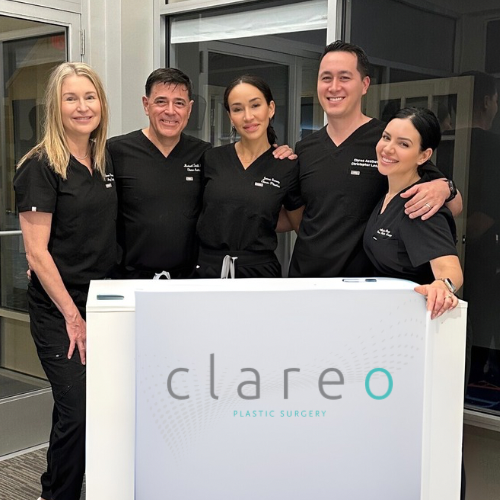
At Clareo, treatment planning includes meeting with one of our board-certified plastic surgeons and nurse injector to look at the mouth at rest and in motion before product is placed. Once the plan is reviewed, the area is cleansed and filler is placed in small amounts based on the shape, support, or definition being addressed.
Afterward, the lips may look swollen, tender, bruised, or slightly uneven while the area settles. Many patients return to normal routines fairly quickly, but exercise, alcohol, heat exposure, makeup, and social plans may need to be adjusted based on aftercare guidance.
The first look is not always the final result. Early swelling can make the lips look fuller or less even than expected, so follow-up guidance helps clarify what is part of normal settling and what should be checked.
Lip filler is non-surgical, but it still needs careful medical judgment. Possible risks include swelling, bruising, tenderness, lumps, asymmetry, infection, cold sore flare-ups, dissatisfaction with the appearance, and rare but serious vascular complications.
Safety depends on anatomy, product choice, injection technique, sterile practice, aftercare, and the judgment to know when less is the better option. This is why an honest health history and realistic goals matter.
Filler can soften certain lines or support lip shape, but it cannot correct every concern around the mouth. Depending on what the evaluation shows, the best recommendation may be less filler than expected, a staged approach, or a different option entirely.
Start with an evaluation. Your provider can look at your lip shape, facial balance, goals, health history, and whether filler is likely to create the kind of change you want.
Yes, when the plan focuses on shape rather than size. Careful placement can refine the border or Cupid’s bow without making the lips look noticeably fuller.
Swelling is expected after treatment and can make the lips look fuller or slightly uneven at first. The early appearance is not the final result.
Build in time for swelling or bruising to settle. If you have photos, travel, or a major event planned, bring that up before choosing a treatment date.
Yes. Prior filler can affect shape, symmetry, tissue feel, and placement. Your provider may recommend waiting, adjusting the approach, or discussing dissolving before adding more.
Ask what changes are realistic, how much product may make sense, what risks apply to you, what recovery may involve, and whether another option would fit better.
It may help soften certain lines near the lips, especially when volume loss is part of the issue. Deeper wrinkles or expression-related lines may need another approach.
Certain hyaluronic acid fillers can be dissolved with an enzyme when clinically appropriate. Reversal is not always immediate or simple, which is why planning matters.
Results vary based on the product, placement, metabolism, movement, and treatment history. Many patients choose maintenance over time, but the timing should be based on the individual.
Natural-looking filler usually comes down to restraint, careful placement, soft transitions, and respect for the patient’s existing features. After treatment, the lips should still fit the face.
Lip filler should feel like a considered decision, not a guess about how much volume to add. The right plan should account for your natural lip shape, facial proportions, prior filler, comfort level, and the way your mouth moves when you smile or speak.
Clareo Plastic Surgery offers consultation-based lip filler planning for patients who want a measured result that still feels like their own features. To talk through your goals and decide whether filler makes sense, schedule a consultation or call (617) 793-7272.
See how patients experience Clareo’s unrelenting commitment to quality, safety and exceeding expectations.