Shop SkinBetter Products Here
BOSTON PLASTIC SURGERY
If you’re thinking about Botox® near Brookline, start with what you want to look different and what you want to preserve. You may want to soften a tense look between the brows, reduce forehead movement, or address crow’s feet or early expression lines that show up in photos.
A good consultation should connect those concerns to your anatomy, movement, comfort level, and realistic goals. At Clareo Plastic Surgery, recommendations are based on your face, your preferences, and what can look balanced without making the result feel forced.
Before discussing product, dose, or treatment areas, describe the specific change you’re hoping to see. “I look tired even when I’m rested” is different from “my forehead lines bother me when I raise my brows.”
That distinction matters. Botox® and other neuromodulators work by temporarily relaxing selected muscles that contribute to certain expression lines. They don’t improve every texture concern, lift loose skin, or replace procedures designed for deeper aging changes.
Being specific about what bothers you helps shape the plan, including whether a neuromodulator makes sense and how lightly to start.
Neuromodulators like Botox® are usually best suited for lines linked to repeated expression. These are often called dynamic wrinkles, and they can appear across the forehead, between the brows, or near the outer corners of the eyes.
Not every line forms for the same reason. A crease may come mostly from muscle activity, or it may be tied to skin quality, volume loss, sun exposure, genetics, or normal support changes. Careful evaluation helps keep the plan realistic.
Expression lines tend to become more noticeable when you raise your brows, squint, smile, or frown. Volume loss may show up as flattening, hollowing, deeper folds, or a change in contour.
That difference matters because neuromodulators and dermal fillers are not interchangeable. One affects muscle movement, while the other addresses volume or contour in specific areas.
Forehead lines, frown lines, and crow’s feet may seem separate, but the way the face moves is connected. Treating one area too strongly or overlooking a related area can affect brow position, expression, and balance.
This is why a first visit should look at the face as a whole. A good evaluation looks at how each area moves, how those patterns work together, and what kind of result would still feel like you.
Your result should still look like your face in motion. That could involve softening a line without changing how you smile, lift your brows, or show emotion. It could also mean starting conservatively, then adjusting future care based on how your face responds.
For Clareo, natural-looking softening depends on proportion, muscle movement, and how much expression you want to keep.
The goal is softer movement, not a blank or stiff look. When neuromodulators are planned carefully, they can reduce the pull of selected muscles while keeping your expressions familiar.
For your first appointment, a conservative plan can give you and your provider a clearer sense of how your face responds. It doesn’t ensure a specific outcome, but it can make the process feel more measured and easier to refine over time.
Neuromodulators may be a good fit if the lines you notice are mostly tied to facial movement, but that decision should come from a closer look at your face, goals, and health history.
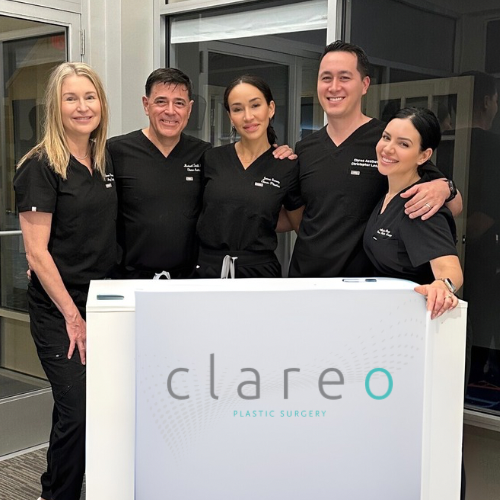
Clareo’s board-certified plastic surgeons and nurse injector can evaluate how your brows, forehead, and surrounding features move together, then talk through what can be softened while still keeping your expression natural.
Medical history is important for any appointment at Clareo. Your provider may ask about:
Being open about those details helps the team recommend an option that fits your face, comfort level, and broader aesthetic goals.
Neuromodulators aren’t designed to correct every concern. If the issue is mainly volume loss, skin laxity, deeper folds, or texture change, another option may make more sense.
That doesn’t mean you automatically need a more involved option. It means the plan needs to start with what is causing the concern, then match the option to your face and goals.
Your first visit will help you understand what neuromodulators can realistically do for your face, not just how the injections work.
At Clareo, the conversation starts with what you notice, what you want softened, and how much movement you want to keep. We may evaluate your facial movement, review your health history, and talk through product choice, dosing, aftercare, and follow-up.
The appointment itself is often brief, but the decision should not feel rushed. You should leave with a clear sense of why the plan does or does not fit your goals.
You don’t need to arrive with every answer, but having a few questions in mind can make the visit more useful.
Helpful topics to cover include:
This keeps the conversation focused on planning, safety, and expectations instead of guessing at units or comparing your face to someone else’s.
Botox® is one type of neuromodulator, not a generic name for every wrinkle relaxer. Other neuromodulator brands include Dysport®, Daxxify®, and Xeomin®, though the right choice depends on what you want the injectable to address and the provider’s recommendation.
Neuromodulators are different from dermal fillers. They affect selected muscle movement, while fillers such as Juvéderm® are used to address volume or contour in specific areas. You may need one, the other, both, or neither, depending on what is causing the change you notice.
This distinction matters because a request for cosmetic Botox may lead to a different conversation once the face is evaluated. The right choice comes from your anatomy, your goals, and the kind of change you want, not from assuming one injectable fits every situation.
You won’t experience Botox®’s full effects immediately. Early changes may appear within a few days, but the final result is usually assessed after the product has settled. Timing can vary based on the area treated, the dose, muscle activity, and how your body responds.
That timing is worth considering if you’re planning around photos, travel, a wedding, or an important work event. Scheduling with enough time for the results to develop can make the experience feel less rushed and leave room for any follow-up questions.
Duration varies as well. The effect is temporary and gradually wears off, so maintenance plans are discussed individually rather than assumed.
Preparation should be simple and specific to your plan. Before your visit, ask if any medications, supplements, skin products, or recent procedures need to be discussed. Do not stop prescribed medication unless instructed by the prescribing clinician or your provider.
Before you leave, clarify:
After treatment, you’ll receive instructions based on what was done. Brief discomfort, redness, swelling, or bruising can happen at injection sites, though the experience varies by person.
Call the office if something feels unusual, if swelling or irritation is not improving as expected, or if you’re unsure how the area is settling. You can also ask when it makes sense to review your result or whether a follow-up visit would be helpful.
The choice of product matters, but placement, dose, judgment, and facial balance matter too. Small differences can affect brow position, expression, symmetry, and how balanced the result feels once it settles.
At Clareo, injectable planning starts with facial anatomy, safety, proportion, and restraint. The goal is to help you understand when neuromodulators makes sense, when a lighter approach is better, and when another non-surgical option may fit your goals more closely.
Botox® works by affecting selected muscle activity, so placement needs to reflect how your face actually moves. A dose that works well for one person may feel too strong, too subtle, or poorly balanced for someone else.
The forehead, brow, and eye area are closely connected. Treating one area without considering nearby movement can affect the final result, even when the product itself is appropriate.
It can be, but it depends on your goals, facial movement, health history, and comfort level. A first visit can confirm whether it makes sense for what you want to address.
If the concern is tied to muscle movement, a neuromodulator may help. If it involves volume loss or contour change, filler may be discussed instead.
That should not be the goal. Careful dosing and placement can soften selected movement while keeping your expression familiar, but the plan needs to match your anatomy.
That is worth saying clearly at your visit. A conservative starting point may be appropriate, especially if you want subtle softening and prefer to see how your face responds first.
Give the product time to settle before deciding how you feel about the outcome. Your provider can explain when to assess changes or discuss follow-up.
Share medications, allergies, medical conditions, pregnancy or nursing status, prior injectable history, and previous procedures. Those details can affect the recommendation.
It can happen if the forehead is not planned carefully. Brow position, muscle strength, and dosing all matter because nearby areas work closely together.
Maintenance varies. Some people return every few months, while others wait longer based on movement, goals, metabolism, and how they feel about their results.
Ask for instructions before your appointment. General guidance may include discussing certain medications or supplements and avoiding rubbing treated areas afterward.
Contact our office before judging the outcome too early. Timing matters, and our team can explain whether observation or a follow-up visit makes sense.
If you’re in Brookline and considering Botox®, a consultation can help clarify where treatment may fit your anatomy, expression patterns, and goals. Clareo Plastic Surgery can walk you through what neuromodulators can realistically soften, what they can’t change, and how to plan treatment without making the result feel overdone.
Located in Chestnut Hill, Clareo serves patients throughout Boston, New England, and beyond with cosmetic-focused care built around proportion, patient choice, and realistic expectations. For individualized guidance, book a consultation or call (617) 793-7272.
See how patients experience Clareo’s unrelenting commitment to quality, safety and exceeding expectations.