




GLP-1 medications can be life-changing.
They can help patients lose meaningful weight, quiet persistent hunger signals and make progress that previously felt impossible.
I prescribe them. I believe in them.
But patients also deserve an honest conversation about what may happen after significant or rapid weight loss. Facial volume can decrease. Skin may not contract at the same rate as fat loss. Breasts may deflate or sag. Some patients may eventually consider facial procedures or body contouring surgery.
That does not mean GLP-1 medications are a mistake.
It means patients should understand the complete picture before, during and after weight loss.
Quick Answers: GLP-1 Weight Loss and Appearance
| Question | Direct Answer |
| What is Ozempic face? | A commonly used term for facial hollowing or an aged appearance after significant weight loss reduces facial fat compartments faster than the skin contracts. |
| Does every patient develop facial changes? | No. Changes vary based on age, genetics, skin quality, total weight loss and speed of loss. |
| Can loose skin improve with exercise alone? | Resistance training can improve muscle tone and body composition, but it cannot remove substantial redundant skin. |
| Can breasts change after GLP-1 weight loss? | Yes. Significant systemic fat loss can reduce breast volume and accelerate sagging in some patients. |
| When should surgery be considered? | After weight is stable at goal weight, generally for at least three to six months before an operation is planned. |
What Are GLP-1 Medications?
GLP-1 stands for glucagon-like peptide-1. It is a hormone your body naturally produces after eating.
GLP-1 signals fullness, slows stomach emptying and supports insulin release. Medications such as semaglutide act on that pathway. Tirzepatide also targets GIP, a second receptor involved in weight regulation.
The result many patients describe is simple: food noise becomes quieter.
For people who have spent years feeling preoccupied by hunger or struggling with weight, that change can be profound. These medications address biology, not character.
How Much Weight Can Patients Lose on GLP-1 Medications?
In Episode 3 of the Honest Lee Podcast, the following figures are discussed:
| Medication | Clinical Trial Weight Loss Discussed in the Episode | Real-World Weight Loss After 1 Year Discussed in the Episode |
| Semaglutide | Approximately 14.9% of total body weight | Approximately 7.7% of total body weight |
| Tirzepatide | Approximately 20.9% of total body weight | Approximately 12.4% of total body weight |
The practical point is not that real-world results are insignificant. They can still be substantial.
The point is that patients should have realistic expectations. Dose, treatment duration, cost, side effects and whether a patient remains on medication all affect real-world outcomes.
For many patients, GLP-1 treatment is best understood as long-term medical management rather than a short, finite course.
What Is Ozempic Face?
Ozempic face is not a formal diagnosis. It is a commonly used description for facial changes that may occur after significant weight loss.
Your face contains distinct fat compartments that help support the:
- Cheeks
- Temples
- Under-eye area
- Jawline
When body fat decreases quickly, those facial fat compartments may shrink as well. If the skin does not tighten at the same pace, the face may appear:
- Hollow
- Gaunt
- Less supported
- Older than it appeared before weight loss
This is not limited to one medication. It is a potential effect of significant or rapid weight loss from any cause.
Who Is More Likely to Notice Facial Changes?
Facial changes are not perfectly predictable. Two patients can lose similar amounts of weight and have very different experiences.
Factors that may influence the result include:
- Age
- Genetics
- Baseline skin elasticity
- Total amount of weight lost
- Speed of weight loss
- Dose titration and treatment pattern
Skin elasticity typically decreases with age. That matters because many patients using GLP-1 medications are also at a stage of life when the skin has less ability to contract after rapid volume loss.
What Can Be Done About Facial Volume Loss?
Treatment depends on the severity of the change and the patient’s goals.
Mild Facial Volume Loss
Targeted injectable filler may restore specific areas of lost volume. The goal is not to overfill the face. The goal is to restore support where volume has been depleted.
Moderate or Significant Facial Volume Loss
Fat grafting may be considered for selected patients. During fat grafting, a surgeon harvests the patient’s own fat, processes it and transfers it to areas of facial volume loss.
This is a surgical procedure with recovery, but it may offer natural-looking structural restoration for the right patient.
Planning Earlier May Help
Patients starting GLP-1 treatment can discuss supportive strategies with their medical team, including:
- Medically appropriate dose titration rather than pursuing the fastest possible loss
- Adequate protein intake
- Resistance training to preserve muscle
- Early consultation if facial or skin changes begin to cause concern
- Collagen-supporting treatments when appropriate for the individual patient
The best plan is individualized. Patients should coordinate medical weight-loss decisions with their prescribing clinician and aesthetic concerns with a qualified plastic surgeon.
Why Does Loose Skin Happen After Significant Weight Loss?
The face often receives the most attention, but major body changes may be more significant surgically.
When a patient loses a substantial amount of weight quickly, fat volume decreases faster than skin can contract. Areas commonly affected include:
- Abdomen
- Upper arms
- Inner thighs
- Breasts
- Neck and jawline
Younger patients with strong skin elasticity may experience more contraction. Other patients may be left with redundant skin that folds, hangs or no longer matches the body shape they expected after weight loss.
Can Building Muscle Fix Excess Skin?
Resistance training is still valuable. It can improve strength, body composition and overall contour.
But muscle cannot remove substantial excess skin.
When skin is truly redundant, it is a structural issue. For some patients, surgical removal is the most realistic way to address it.
How Can GLP-1 Weight Loss Affect the Breasts?
Breast changes after significant weight loss are common but often under-discussed.
Breasts contain varying amounts of fatty tissue. When patients lose significant body fat, breast volume may decrease as well. This may lead to:
- Breast deflation
- Loss of upper-pole fullness
- Increased sagging
- A mismatch between how healthy a patient feels and how the breasts appear
This can happen in younger and older patients. GLP-1 medications produce systemic weight loss; patients cannot choose where fat loss will occur.
Surgical Options for Breast Changes
Options depend on the amount of remaining tissue, degree of sagging and the patient’s goals.
| Concern | Possible Treatment Approach |
| Sagging with adequate remaining volume | Breast lift |
| Sagging with significant volume loss | Breast lift with augmentation |
| Selective volume restoration needs | Fat grafting in appropriate candidates |
A consultation is necessary to determine which option, if any, matches the patient’s anatomy and goals.
When Should Patients Consider Plastic Surgery After GLP-1 Weight Loss?
Timing matters.
Patients should generally wait until they are at goal weight and that weight has remained stable for at least three to six months before pursuing surgery.
The key distinction is this:
Goal weight is not the same as stable goal weight.
If a patient is still losing weight, the tissues are still changing. Operating too early may affect the predictability and durability of the result.
This is especially important for procedures such as:
- Tummy tuck
- Arm lift
- Breast lift
- Body contouring
- Facial fat grafting
What Can Patients Do During the Waiting Period?
The stabilization period is not wasted time. Patients can use it to:
- Maintain stable nutrition
- Prioritize protein intake with medical guidance
- Build muscle through resistance training
- Discuss skin-support treatments when appropriate
- Identify which body concerns remain after weight has stabilized
- Schedule a surgical consultation for individualized planning
Should Fear of Loose Skin or Ozempic Face Stop Someone From Discussing GLP-1 Treatment?
For patients with clinically significant obesity or weight-related health conditions, aesthetic concerns should not automatically prevent a medical conversation about GLP-1 treatment.
Weight-loss medications may provide meaningful metabolic and cardiovascular benefits for appropriate patients. Those potential benefits deserve serious discussion with a prescribing clinician.
The risk-benefit calculation may be different for someone considering medication primarily to lose a smaller amount of weight for cosmetic reasons. In that situation, patients should have a particularly careful discussion with their physician about goals, benefits, risks and long-term expectations.
The honest answer is not that everyone should take these medications or that no one should.
The honest answer is that patients should understand both the health benefits and the possible aesthetic consequences.
Five Practical Steps for Patients Considering or Taking GLP-1 Medications
- Talk with your prescribing clinician about realistic weight-loss expectations.
Understand your treatment plan, maintenance expectations and possible side effects. - Plan for body composition, not just scale changes.
Protein intake and resistance training may help preserve muscle during weight loss. - Pay attention to early changes in your face, neck, breasts and skin.
Changes vary, but noticing them early can help you make informed decisions. - Do not rush into surgery while your weight is still changing.
Wait until you have maintained a stable goal weight for at least three to six months. - Seek an individualized surgical assessment when needed.
Excess skin, facial volume loss and breast changes require patient-specific recommendations.
Frequently Asked Questions
Is Ozempic face caused only by Ozempic?
No. Facial hollowing or skin laxity can happen after significant weight loss from different causes, including other GLP-1 medications or non-medication weight loss.
Can slowing weight loss prevent loose skin?
Slower weight loss may give skin more time to adapt, but it cannot guarantee that laxity will not occur. Age, genetics, skin quality and total weight loss also matter.
Should I see a plastic surgeon before I finish losing weight?
A baseline consultation may be useful if you are concerned about facial or body changes. Definitive surgery is generally planned after your weight has stabilized.
Can filler correct Ozempic face?
For mild volume loss, targeted filler may help selected patients. More significant changes may require a different approach, such as fat grafting or another individualized treatment plan.
Can a tummy tuck fix loose skin after GLP-1 weight loss?
For patients with significant excess abdominal skin after stable weight loss, a tummy tuck may be an appropriate option. Candidacy depends on anatomy, health status, weight stability and surgical goals.
The Bottom Line
GLP-1 medications can be remarkable tools for appropriate patients.
They can also create changes that many patients do not anticipate: facial volume loss, loose skin, breast deflation and a need for surgical planning after weight loss.
These are not reasons to dismiss the medication. They are reasons to have a complete conversation.
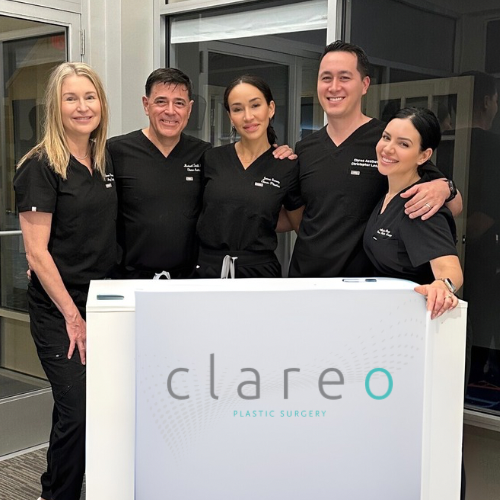
At Clareo Plastic Surgery, Dr. Chris Lee helps patients understand what weight loss has changed, what may improve without surgery and what options may be appropriate once weight is stable.
Watch Honest Lee Podcast Episode 3
Medical Note:
This article is for general educational purposes and is not a substitute for personal medical advice. Medication decisions should be made with your prescribing clinician. Surgical recommendations require an individualized consultation.