


A tabloid report claimed Kris Jenner was unhappy with her facelift result. Jenner later denied that account, saying she loves her results and her surgeon.
But before that denial, a larger problem unfolded: surgeons publicly analyzed her face, speculated about her procedure, and criticized her outcome without examining her or knowing her medical history.
That matters because real patients are watching.
Quick Answer
A facelift cannot be accurately judged from one candid photograph. Results naturally settle over time, aging continues after surgery, and filters, makeup, lighting, camera angle, tissue quality, and prior procedures all affect how a face appears in an image.
The right question is not: “Which surgeon can diagnose a celebrity’s facelift from Instagram?”
The right question is: “How do I evaluate a surgeon and set realistic expectations for my own face?”
What Happened?
In Episode 6 of Honest Lee, Dr. Chris Lee discusses the public conversation surrounding Kris Jenner’s reported facelift.
According to the episode:
- A tabloid story claimed Jenner’s facelift was “already slipping” and that she was unhappy with her surgeon.
- Jenner later called the story a “flat-out lie” and stated that she loves her results and her doctor.
- During the period between the original story and her response, surgeons posted public commentary about what had allegedly gone wrong.
- Much of that commentary was based on photographs rather than an examination, medical records, operative details, or knowledge of her anatomy.
Dr. Lee’s concern is simple: confidently diagnosing a surgical outcome from a celebrity photograph is not patient education. It is speculation.
The Core Issue: A Photo Is Not a Clinical Examination
A photograph cannot tell a surgeon everything required to evaluate a facelift outcome.
To assess a patient appropriately, a surgeon would need to understand:
- The patient’s starting anatomy.
- Skin quality and elasticity.
- Prior procedures.
- Surgical technique actually performed.
- Healing timeline.
- Medical history.
- Weight changes.
- Lighting, camera angle, makeup, filters, and image editing.
Without that information, precise claims about why a facelift “failed,” “slipped,” or was “over-corrected” are not reliable clinical conclusions.
Dr. Lee’s Position
Public education is appropriate when it is honest about uncertainty.
For example, a surgeon may explain:
- What a facelift is designed to accomplish.
- Why results change over time.
- How tissue quality affects durability.
- What questions patients should ask in consultation.
What is not appropriate is declaring exactly what happened to an individual patient without examining that patient.
What Does a Facelift Actually Do Over Time?
A facelift is intended to reposition and tighten facial tissues. It is not intended to stop aging.
The simplest explanation:
A facelift resets the clock. It does not freeze the clock.
After surgery:
- Swelling resolves.
- Tissues settle.
- Skin continues to age.
- Gravity continues.
- Volume continues to shift.
- Skin elasticity continues to change.
An early postoperative result may appear tighter or more dramatic than the final settled result. That does not automatically mean the procedure failed.
Is a Facelift “Slipping” If the Result Looks Different Later?
Not necessarily.
The word “slipping” suggests that something broke or that the procedure failed. But, as Dr. Lee explains in the episode, a difference between an early postoperative photo and a later candid image may simply reflect normal settling and ongoing aging.
A fair assessment should account for:
| Comparison Factor | Why It Matters |
| Time after surgery | A three-month result may look different from a one-year result. |
| Lighting | Professional lighting can dramatically soften shadows and texture. |
| Makeup and styling | Professional preparation affects the appearance of the face. |
| Filters or editing | Curated images may not reflect real-life appearance. |
| Camera angle | Candid photography can exaggerate asymmetry, folds, or laxity. |
| Tissue quality | Age and skin elasticity affect how results settle over time. |
One candid photo is not a complete clinical outcome review.
Age and Tissue Quality Matter
Facelift longevity depends on more than the technique used.
Dr. Lee explains that older patients often have:
- Less skin elasticity.
- Less collagen.
- More cumulative sun damage.
- More advanced tissue descent.
- Different healing and settling patterns than younger patients.
This does not mean an older patient is a poor candidate for facelift surgery. It means the consultation must include a realistic conversation about what surgery can achieve and how the result may evolve over time.
Key Point
A technically sound facelift can still settle differently in a patient near age 70 than in a patient near age 50.
That is not automatically a surgical error. It is part of operating within the realities of biology.
Deep Plane vs. SMAS Facelift: Is One Always Better?
No technique is automatically best for every patient.
In the episode, Dr. Lee addresses the online debate between deep plane facelifts and SMAS-based facelifts.
Deep Plane Facelift
A deep plane facelift operates within a deeper tissue layer and releases certain retaining ligaments before repositioning facial tissues. Advocates often argue that it can provide natural-looking results and potentially improved longevity in selected patients.
SMAS Facelift
SMAS-based facelifts tighten or reposition the superficial musculoaponeurotic system using established techniques such as plication, imbrication, or SMASectomy. These approaches have been used successfully for decades.
What Patients Should Understand
Both approaches can produce excellent results when used appropriately by an experienced surgeon.
The correct technique depends on factors such as:
- Anatomy.
- Degree of facial descent.
- Skin and tissue quality.
- Surgical history.
- Patient goals.
- Surgeon expertise.
A surgeon cannot determine from a public image alone that another patient would have had a better result with a different facelift technique.
The Filter and Makeup Problem
Celebrity images create unrealistic expectations because the public usually sees highly controlled photographs.
Professional images may involve:
- Expert makeup.
- Hair styling.
- Controlled lighting.
- Selected camera angles.
- Image retouching.
- Social media curation.
A candid event photograph is not the same visual product.
For patients considering facial surgery, this distinction is critical:
Surgery can improve tissue position and facial aging. It cannot reproduce professional lighting, image retouching, or a permanent filter.
A patient comparing their real-life face to a heavily produced celebrity image may be comparing a surgical goal to a media production result. Those are not the same thing.
Does a More Expensive Facelift Guarantee a Better Result?
No.
In the episode, Dr. Lee discusses reports that Kris Jenner’s facelift may have cost between $100,000 and $300,000. He argues that extremely high celebrity pricing should not be interpreted as proof of a superior surgical outcome.
According to Dr. Lee, fees for experienced, board-certified plastic surgeons in major metropolitan markets often fall far below celebrity-level numbers, even in premium practices.
What Price Can Reflect
A surgical fee may include:
- Surgeon expertise.
- Anesthesia.
- Accredited operating facility costs.
- Postoperative care.
- Practice experience and service level.
At very high celebrity price points, cost may also reflect:
- Exclusivity.
- Privacy and discretion.
- Concierge access.
- Surgeon brand.
- Demand within a celebrity market.
The Practical Patient Takeaway
The highest price does not guarantee the best facelift result.
Patients should prioritize:
- Board certification.
- Facelift experience.
- Natural-looking before-and-after results.
- Long-term outcomes where available.
- Accredited surgical facilities.
- A consultation tailored to their anatomy and goals.
How Can You Tell Whether a Facelift Surgeon Is Good?
Use evidence that relates to your own care rather than social media commentary about someone else’s face.
Facelift Surgeon Evaluation Checklist
Ask these questions before choosing a surgeon:
- Is the surgeon board-certified in plastic surgery?
- Does the surgeon frequently perform facial rejuvenation surgery?
- Do the before-and-after photos show natural results?
- Are long-term results available, not only early postoperative images?
- Does the surgeon explain which technique fits your anatomy and why?
- Does the consultation address risks, recovery, revision, and realistic longevity?
- Does the surgeon listen carefully to your goals?
- Is surgery performed in an accredited facility?
- Do you feel informed rather than pressured?
A Useful Consultation Question
Ask:
“What approach would you recommend for my anatomy, and why?”
A thoughtful answer should be specific to your face, tissue quality, goals, and medical history.
How Long Does a Facelift Last?
There is no single number that applies to every patient.
A facelift does not expire on a set date. Instead, the benefit persists while aging continues.
In the episode, Dr. Lee explains that duration may vary based on:
- Technique.
- Tissue quality.
- Patient age.
- Sun exposure.
- Weight stability.
- Genetics.
- Lifestyle.
- Prior procedures.
Some patients may discuss further treatment after several years. Others may remain pleased with the benefit for much longer.
The Better Way to Think About Longevity
Do not ask only:
“How many years will my facelift last?”
Also ask:
“How will I continue to age after surgery compared with how I would have aged without it?”
That framing reflects what a facelift is designed to do: create a refreshed starting point, not suspend aging.
Frequently Asked Questions
Can a surgeon accurately judge a facelift result from a photo?
Not reliably. A photo does not provide the clinical information required to evaluate surgical technique, tissue quality, healing, prior procedures, or the patient’s actual appearance in person.
Does a facelift stop aging?
No. A facelift repositions facial tissues and may produce a younger, more rested appearance, but normal aging continues after surgery.
Does a result that settles over time mean the facelift failed?
No. Settling is expected. Early postoperative images may appear more lifted than the long-term result as swelling resolves and tissues adapt.
Is a deep plane facelift always better than a SMAS facelift?
No. Both can provide excellent results in appropriate patients when performed by a skilled surgeon. The right technique depends on the individual patient.
Does paying more guarantee a better facelift outcome?
No. Fees may reflect expertise and practice setting, but very high celebrity pricing can also reflect exclusivity, discretion, and brand positioning rather than a guaranteed clinical advantage.
What should patients focus on when choosing a facelift surgeon?
Patients should look for board certification, meaningful facial surgery experience, natural before-and-after results, thoughtful consultation, realistic expectations, and an accredited surgical setting.
The Bigger Problem With Celebrity Surgery Commentary
The public discussion around celebrity procedures is not harmless entertainment when it changes how real patients feel about their own medical decisions.
When surgeons confidently critique a result without adequate information, patients may become:
- More anxious about surgery.
- Less trusting of qualified surgeons.
- More confused about technique.
- More likely to chase unrealistic or filtered outcomes.
- More vulnerable to marketing framed as expert certainty.
Dr. Lee’s message is not that patients should ignore questions or concerns.
It is that patients deserve better information than speculation based on a paparazzi image.
Final Takeaway
Kris Jenner has stated that she is happy with her facelift result and her surgeon. That should matter more than online speculation from people who have not examined her.
For patients considering facelift surgery, the lesson is clear:
- A facelift should create a refreshed version of you, not a filtered version of someone else.
- Results naturally settle and continue to age.
- No single technique is automatically best for every face.
- Price is not the same as outcome quality.
- The right surgeon evaluates your anatomy, your goals, and your expectations in person.
The most useful facelift guidance does not come from a social media pile-on.
It comes from an honest consultation with a qualified plastic surgeon who understands your face.
About Dr. Chris Lee
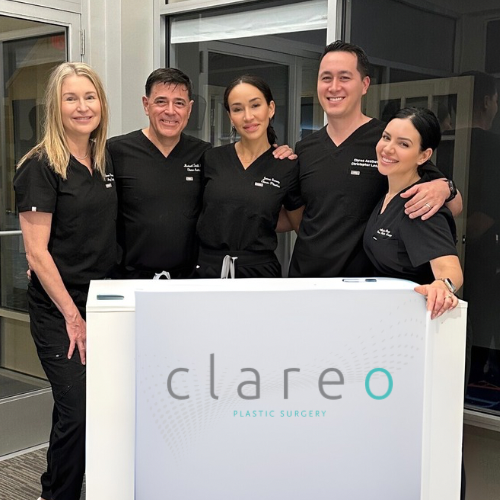
Dr. Chris Lee is a plastic surgeon at Clareo Plastic Surgery in Chestnut Hill, Boston, and the host of the Honest Lee podcast, where he addresses patient questions and current conversations in aesthetic surgery with direct, clinically grounded guidance.
Considering facial rejuvenation surgery?
Learn more about Dr. Chris Lee and schedule a consultation through Clareo Plastic Surgery.
Medical Disclaimer: This article is for educational purposes only and is not a substitute for an in-person evaluation, diagnosis, or personalized medical advice from a qualified plastic surgeon.